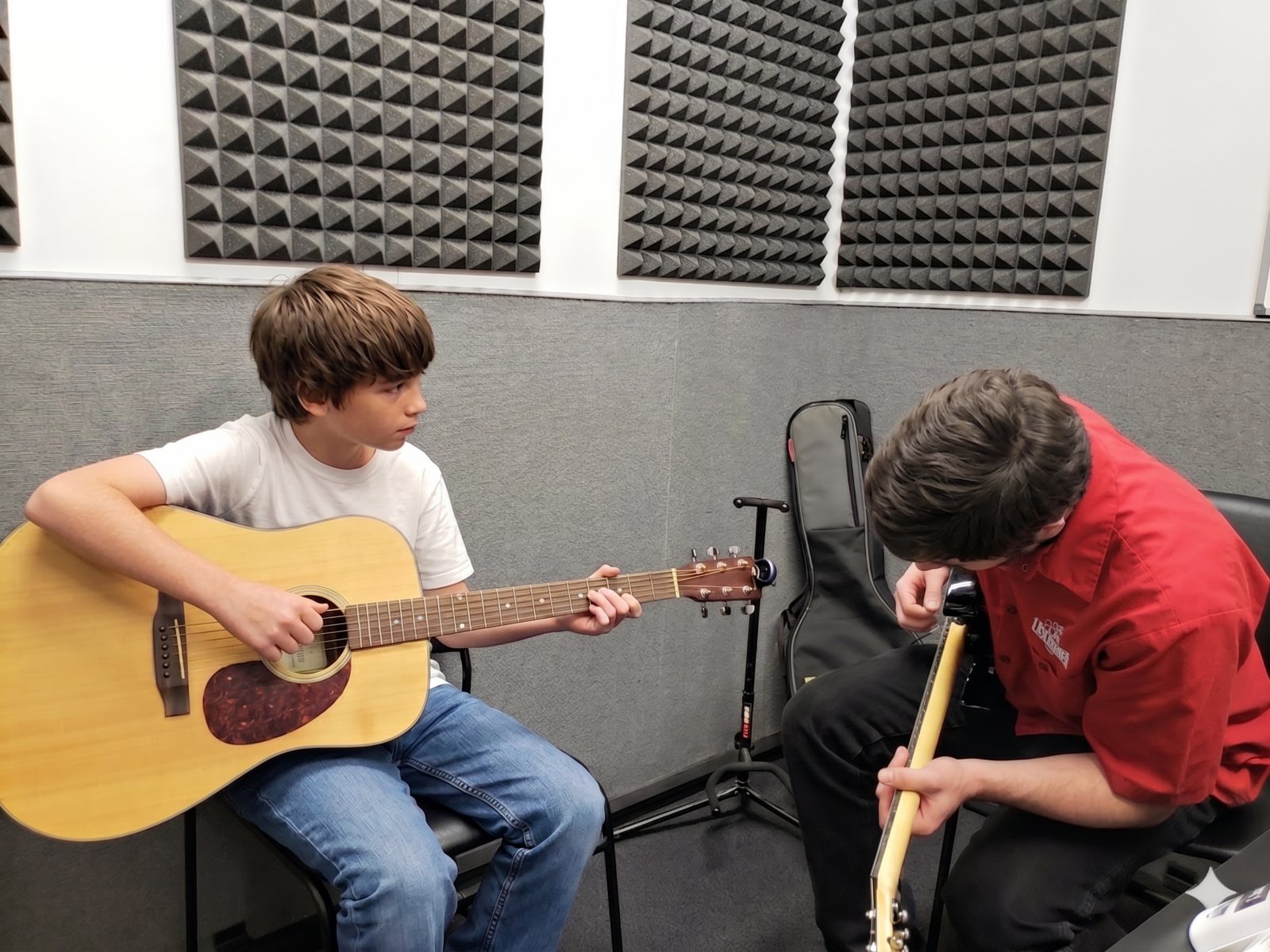
Los Angeles is packed with working musicians. Thousands of them. Session players, touring players, people teaching between gigs. Great news if you want a teacher. Also the reason the search gets overwhelming fast.
I taught through Guitar Center from 2017 to 2024, first in Champaign and then Palmdale. Now I teach independently in Los Angeles and online. I start with something the student wants to play or make, then build the technique around it. Whether you want piano lessons, guitar, bass, or music production training, ask how a teacher would help with your actual music.
Use the questions below to compare teachers, then take one song or unfinished idea to a first lesson. How they work on it with you tells you more than a list of credits.
1. Experience Matters - But Not the Way You Think
Most people check performance credits first. Did they play the Hollywood Bowl? Tour with somebody famous? Fine. But teaching is a completely different skill.
A world-class player who can't explain what their hands are doing won't move you forward. A patient teacher who knows theory, technique, and how beginners actually learn can take someone from zero to confident.
You want both. Someone who has spent real time on stage or in the studio, and real time teaching. Five years of teaching and a track record of students getting better is a good bar.
I've played piano for over 22 years and produced and engineered for more than a decade, but you still need to hear how I explain something. If a chord change stops you, we can slow down that movement and work on a smaller piece of it. You should leave knowing what to repeat and what to listen for.
2. Teaching Style and Philosophy
Every teacher runs lessons differently. Some are strict and classical, all scales and drills. Some are loose and play by ear. Neither one is wrong. One of them might just be wrong for you.
So ask before the first lesson. These are the questions I'd ask:
- How do you structure a typical lesson? You want some technique, some theory, and real songs.
- Do you tailor lessons to student goals? A rigid curriculum is a red flag, unless rigid is what you want.
- What genres do you cover? If you want jazz piano, make sure they actually play jazz and not only classical.
- How do you handle students who get stuck? This one tells you if they're patient and creative or just repeating themselves louder.
My first question to a new student is what they want to be able to do in six months. A specific song? Improvising over changes? Recording their own music? That answer drives everything. Theory, technique, and ear training get worked in along the way instead of sitting off to the side as homework nobody wants.
3. Credentials and Education
You don't need a music degree to be a great teacher. But formal study does put theory, history, pedagogy, and arranging in someone's head in a way that's hard to get from YouTube alone, and it shows up in how they explain things.
What I'd look for:
- Music degree (BA, BM, MM) from an accredited program
- Teaching certifications (MTAC, NCTM, or equivalent)
- Professional performance experience, meaning gigs, recordings, session work
- Production or engineering credits if you care about the recording side
- Student testimonials or reviews that talk about what students actually learned
Just ask. A qualified teacher is happy to tell you. If someone gets cagey about their background, that's your answer.
4. The Trial Lesson Is Everything
If you only remember one thing from this page: always take a trial lesson before committing.
Lessons are one-on-one, sometimes for years. You need to actually like spending time with this person. The trial shows you how they talk, what their setup looks like, and whether there's any chemistry at all.
In the trial, notice:
- Did they listen to your goals, or launch straight into a generic plan?
- Were the explanations clear enough to follow?
- Did you feel encouraged or judged?
- Was the pace appropriate, or did it race or drag?
- Did you walk out excited to practice?
That's exactly why I do a $20 intro lesson. Thirty minutes. We meet, play a little, talk about what you want. If it fits, we build a plan and the $20 goes toward your first month. If not, no hard feelings.
5. Location, Format, and Convenience
LA is huge, and the traffic is real. A fantastic teacher in Pasadena does you no good if you live in Venice and lose 45 minutes each way. Think about:
- In-person vs. online: In person is best for beginners because the teacher can fix your hands. Online is genuinely good now, with decent video and audio.
- Studio location: Close to home or work? Somewhere to park?
- Travel teachers: Some teachers come to you. Convenient, usually more expensive.
- Scheduling flexibility: Evenings and weekends? Can you reschedule without a penalty?
My studio is near Fairfax and Melrose, right next to West Hollywood. Easy from Hollywood, Mid-Wilshire, Beverly Grove, and the neighborhoods around them. I also do home visits nearby when the schedule and address work, and lessons over Zoom at the same price. Same teaching either way.
6. Pricing: What Private Music Lessons Actually Cost in LA
Rates in LA are all over the place. Roughly what you'll see in 2026:
- Budget range ($30-$50/hour): Newer teachers, college students, part-timers. Quality swings a lot.
- Mid-range ($50-$90/hour): Experienced teachers with credentials and a steady studio. The sweet spot for most people.
- Premium range ($100-$150+/hour): Well-known names, Berklee/USC/UCLA faculty, niche specialists.
Be careful with prices that look too good. A $20/hour guitar lesson on Craigslist saves money right up until you've spent months building habits the next teacher has to undo.
Mine: $40 for 30 minutes, $60 for a full hour, and a $20 intro to start. No packages, no contracts. I also do studio time for production and engineering projects at $60/hour.
7. Versatility: Can Your Teacher Cover What You Need?
Something people don't plan for: what you want changes. You start piano and suddenly want to make beats. You play guitar and realize you want to understand the theory underneath it.
A teacher who covers more than one thing can come with you. You don't have to start over with a stranger every time your interests move. They already know your hands, your habits, and how you learn.
That's a big part of how I teach. I cover piano, guitar, bass, music production in Ableton, audio engineering, and mixing and mastering. When a piano student wants to record what they wrote, we just switch over. Nobody has to start from scratch.
8. Red Flags to Watch Out For
Not every teacher in LA is worth the money. I'd walk away over any of these:
- No trial lesson offered: A confident teacher lets you try first.
- Rigid, one-size-fits-all curriculum: Same book, same order, every student. Good teaching adapts.
- Constantly canceling or rescheduling: Your time matters. Someone who doesn't respect it won't get you anywhere.
- Can't explain why: If all you get is what to do and never why, you won't really understand music.
- No clear progression plan: A few lessons in, they should be able to tell you where you are and where you're going.
- Negative or discouraging attitude: If you keep leaving lessons feeling worse about yourself, something's off.
9. How to Get the Most Out of Your Lessons
Finding the teacher is half of it. The other half is on you:
- Practice consistently: 15 to 20 minutes a day beats a two-hour cram once a week. Every time.
- Come prepared: Look at last week's material. Know where you got stuck.
- Ask questions: Don't nod along. Your teacher can't fix confusion they can't see.
- Record your lessons: Most teachers are fine with it, and rewatching a lesson is one of the best practice tools there is.
- Set milestones: A song by next month, a scale by next week. Small and specific.
- Be patient: Progress isn't a straight line. Some weeks you fly, some weeks you're stuck. Normal. Keep showing up.
10. Where to Find Music Teachers in Los Angeles
Where people actually find teachers here, and what's good and bad about each:
- Google Search: "Music teacher Los Angeles" or "piano lessons near me." The teachers who show up have usually put work into their sites, which tends to mean they're established.
- Thumbtack / TakeLessons / Lessonface: Marketplaces with reviews. Easy, but the platform takes a cut, and that can show up in the price or in who's teaching.
- Instagram / YouTube: Teachers who post lessons give you a preview of how they explain things before you ever meet.
- Word of mouth: Still the best. Ask musician friends, music stores, community groups.
- Music schools: Places like the Los Angeles Music Academy or community colleges have referral networks. Less scheduling flexibility, though.
Ready to Find Your Music Teacher?
This is a personal call. The right teacher makes you want to practice, pushes you without burying you, and gets you somewhere you didn't think you'd get.
Before you contact a teacher, write down one thing you want to play or make, what keeps stopping you, and when you could practice. If my approach sounds like a fit, compare my piano, guitar, bass, and music production lessons and bring that short description to the $20 intro lesson.
Afterward, use the same test you would with any teacher: can you explain what you're working on and how to begin practicing it at home?
Frequently Asked Questions
How much do private music lessons cost in Los Angeles?
Most LA teachers charge somewhere between $40 and $120 an hour depending on experience, location, and instrument. Plenty offer cheaper 30-minute lessons and package deals. I charge $20 for the intro, $40 for 30 minutes, and $60 for an hour, with no packages.
Should I choose an in-person or online music teacher?
Both work. In person, the teacher can physically fix your hands and posture, which matters most for beginners. Online is easier to fit into a week. I do both, so you can pick what fits your schedule.
What qualifications should a music teacher have?
Some mix of formal study, performing, and teaching. The degree gives depth, the years of playing and teaching show they can actually do it. Above all, find someone who explains things in a way that lands for you.
How do I know if a music teacher is right for me?
Take a trial lesson. Did they listen to your goals, explain clearly, make you comfortable? A good teacher pushes you and still keeps it fun. Trust your gut after the first one.
How often should I take music lessons?
Weekly works for most people. It's enough time to practice in between without losing the thread. Some advanced students come twice a week, some casual players every other week. Pick what fits your goals, then keep showing up. That part matters more than the schedule.